Welcome to this cyberpunk animated short breakdown, where I walk you through my full creative and technical process, from concept to final render.
The Idea
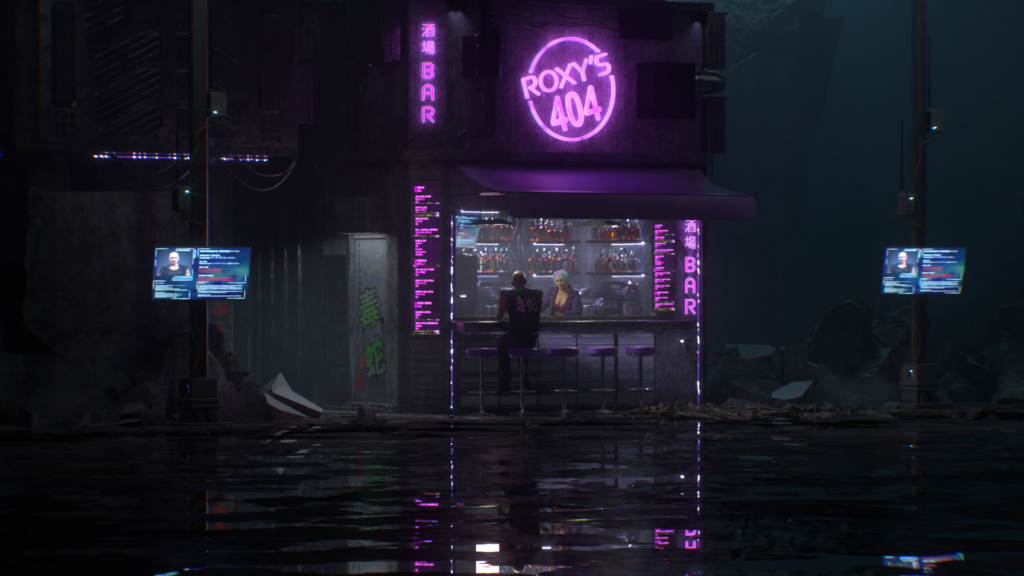
A man sitting in a street bar, talking to the barmaid. All around, destroyed buildings, rubble on the ground, mechanical parts scattered across the road. A typical cyberpunk scene.
The Design
The design is based on multiple references from mangas, movies, and a mix of old and modern tech, often patched together. Wires going everywhere. Multiple air conditioners due to harsh weather conditions. Steam bursting from underground. And neons, colorful of course.
The Story
The man calmly sitting in the bar is wanted dead or alive, with a high reward set on his head. Multiple TV screens show his portrait on the street, but he doesn’t seem to be paying attention. His bald head and confident posture speak for themselves.
What will happen next?
The Technical Pipeline Behind This Cyberpunk Animated Short
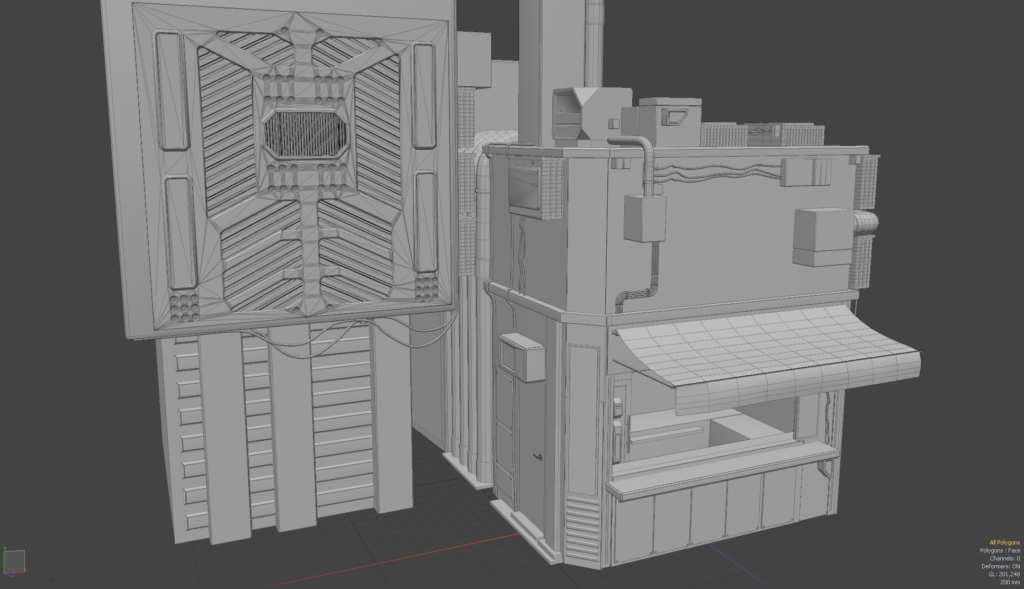
The bar modeled in Modo
This is all hard-surface modeling, approached with an architectural mindset so the character can move naturally inside her bar. There are shelves for bottles, counter space for a coffee machine, a spot for a huge fridge — everything needs to feel functional, as if the space were actually used every day.
Then comes the cyberpunk layer: air conditioners bolted onto the facade, wires running everywhere, patched pipes and mismatched tech scavenged over the years. This mix of practical architecture and improvised technology is what gives the environment its lived-in, believable feel — a place shaped by necessity, not by design.
Working in Modo allowed for precise hard-surface control, especially for the mechanical details like vents, panels, and cable routing, while keeping topology clean enough for later texturing in Houdini.
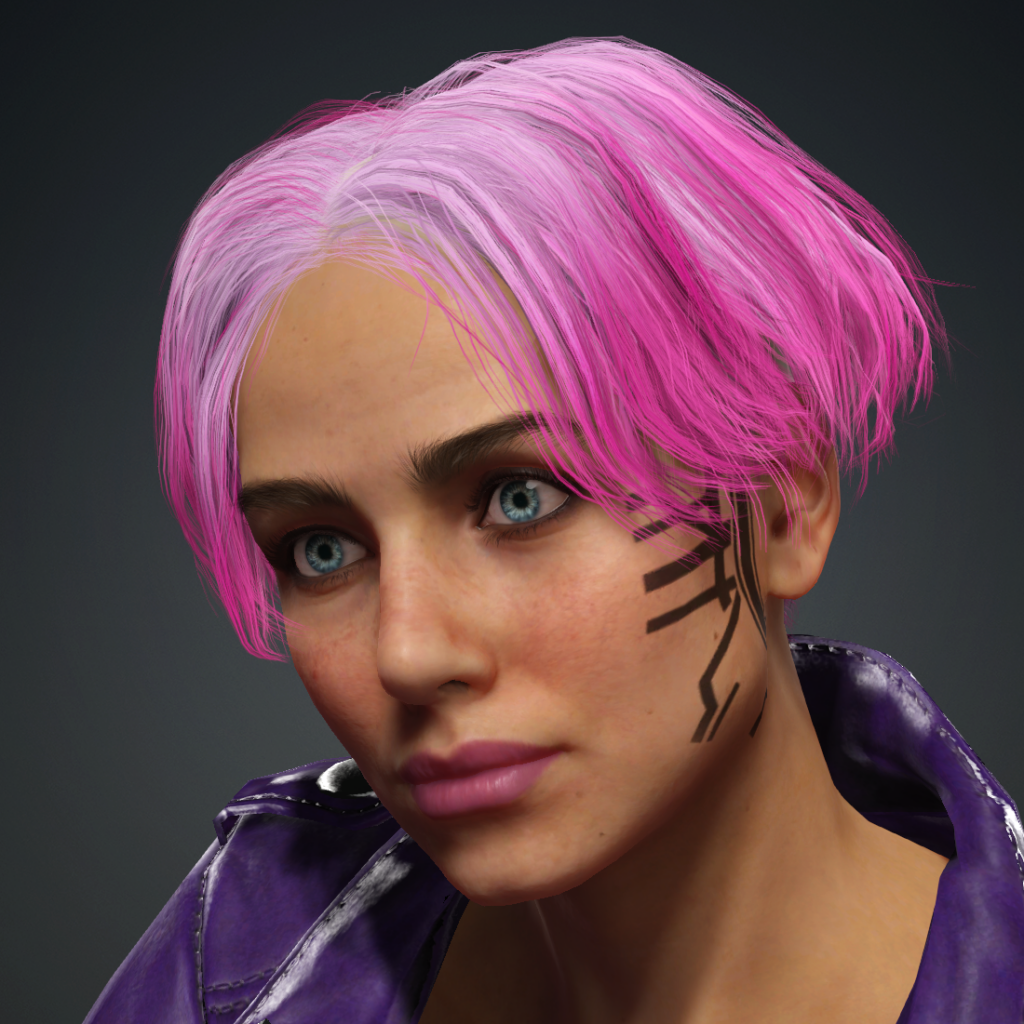
Characters created and posed in Character Creator 4
The main characters had to match the cyberpunk universe through their clothes and tattoos — not necessarily through visible cybernetic enhancements, which I chose not to expose in this scene.
Character Creator 4 made it easy to design a distinctive look quickly: vibrant hair colors, tech-inspired facial tattoos, and glossy synthetic-leather outfits, all typical codes of the cyberpunk aesthetic. The circuit-like tattoo pattern hints at a hidden connection to technology, without fully revealing the character’s augmented nature — leaving room for storytelling and mystery.
This flexibility also speeds up the iteration process: adjusting hairstyles, skin tones, or outfit details takes minutes, letting me focus more time on posing and expression to bring the character’s personality to life.
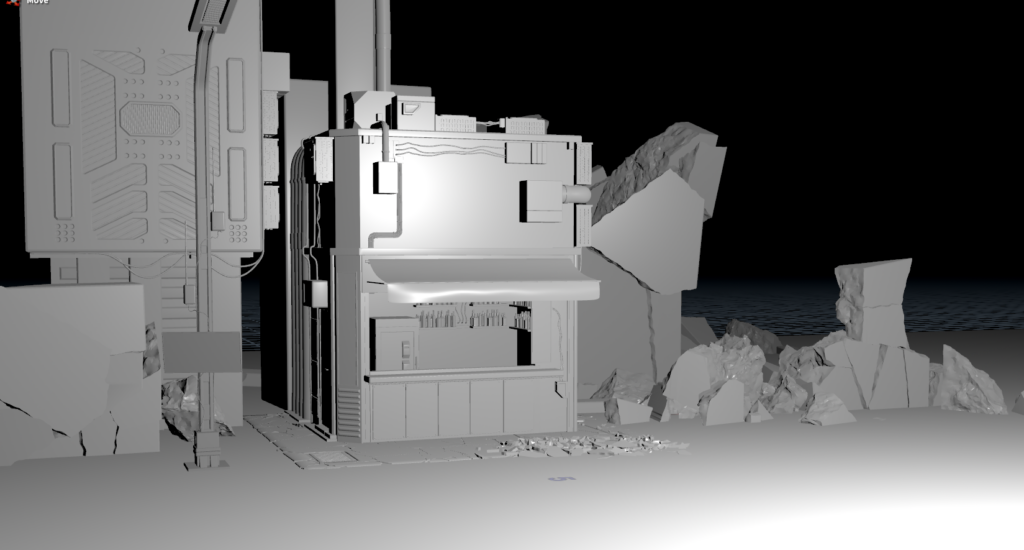
Rubble and destroyed buildings; created in Houdini
The environment has to tell the story of the world where the characters live. In this case, a lot of destroyed buildings, damaged by years of conflict and the ever-increasing power of weapons.
Using Houdini’s procedural tools, I built a destruction system to fracture the buildings and scatter debris naturally across the ground. Rocks, broken concrete slabs, and rubble were generated and distributed using scattering and physics-based placement, giving the scene a raw, chaotic feel while keeping full control over the composition.
This procedural approach also allows quick iteration: adjusting the density, size, or scattering pattern of the debris takes seconds, without having to manually place every single piece.
Adding animated textures to help the narrative
Using animated textures like this one — showing the main character as a wanted criminal on a breaking news broadcast — helps drive the story forward and brings life to the environment, especially when combined with slow camera movements that let the viewer settle into the universe.
The screen displays a fake news channel, “YGNN,” announcing a bounty on the character’s head, complete with Japanese text, a wanted price tag, and warnings about his illegal combat implants. This kind of environmental storytelling lets the audience piece together the world’s context — corporate media, bounty hunting, cybernetic crime — without a single line of dialogue.
Technically, these animated screens are simple looping textures rendered separately and mapped onto emissive surfaces in Houdini, adding motion and narrative depth to an otherwise static background.
Everything imported into Houdini for texturing, lighting, and animation
Next part coming soon