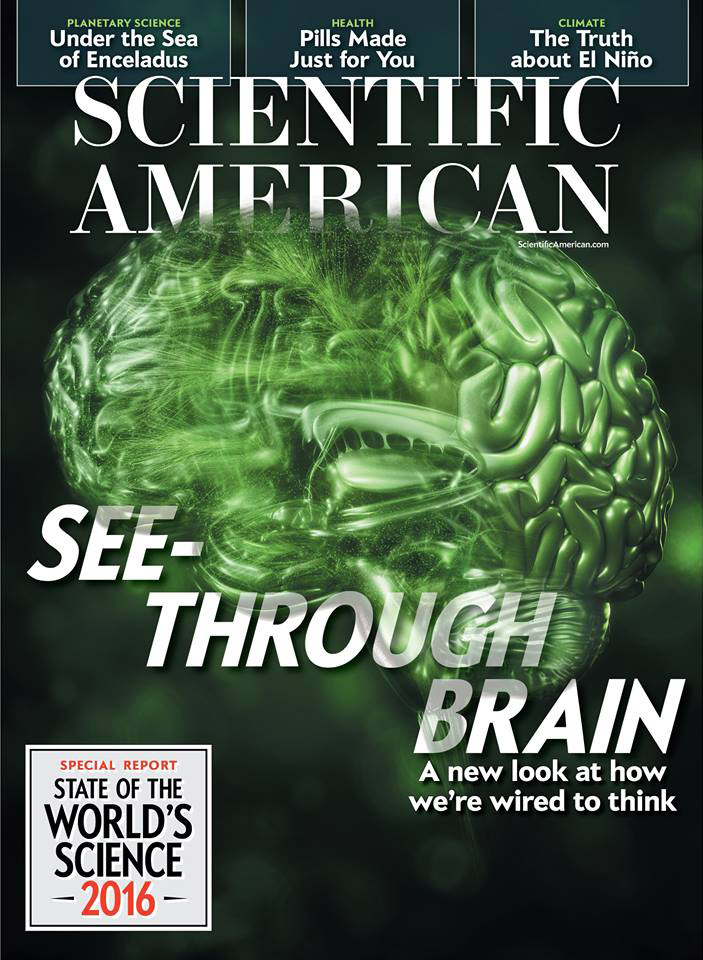
How do you illustrate a revolutionary neuroscience technique for one of the world’s most prestigious science publications?
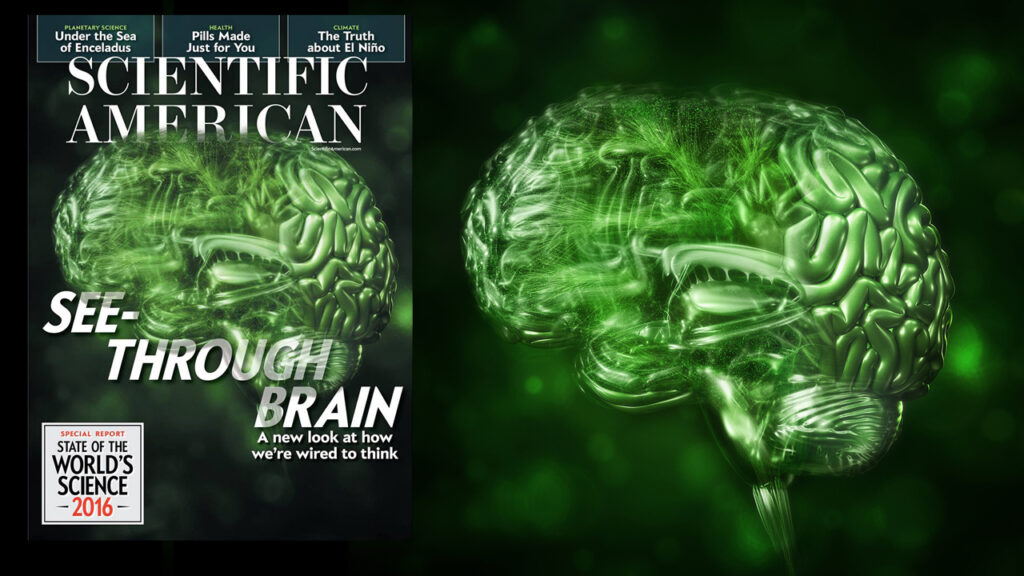
Here’s the full process behind my cover illustration for Scientific American’s special issue titled “See-Through Brain — A New Look at How We’re Wired to Think”, covering Karl Deisseroth’s groundbreaking CLARITY method — a technique that makes brain tissue literally transparent, revealing its neural architecture.
The Brief Show a human brain transitioning from transparent (revealing internal neural connections) to opaque — scientifically credible, yet visually striking enough for a magazine cover.
The Process
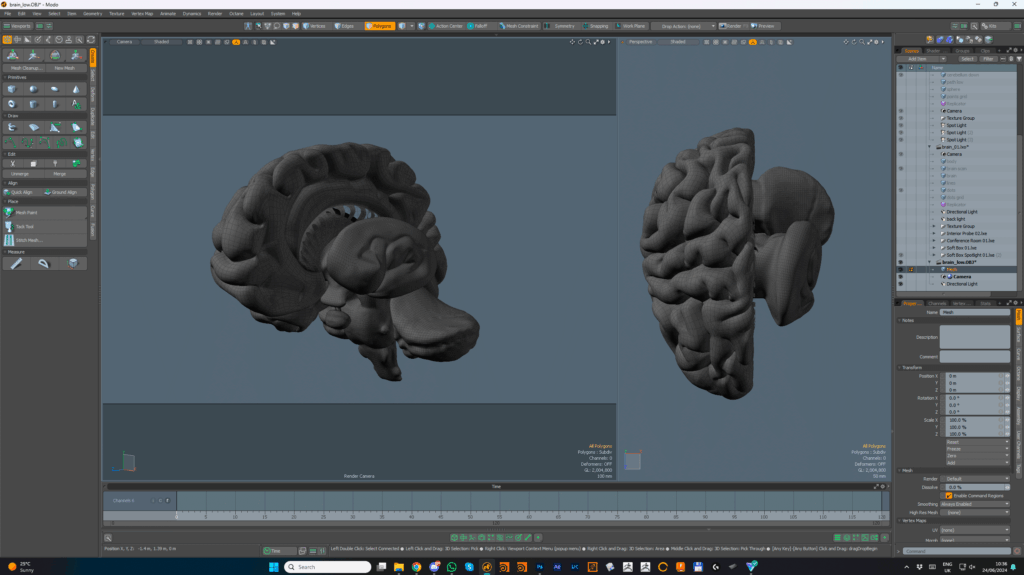
Step 1 — Anatomy first (Modo) Everything starts with accuracy. I built a detailed, anatomically correct brain model in Modo, including all internal structures — because the transparency effect only works if what’s beneath the surface is real.
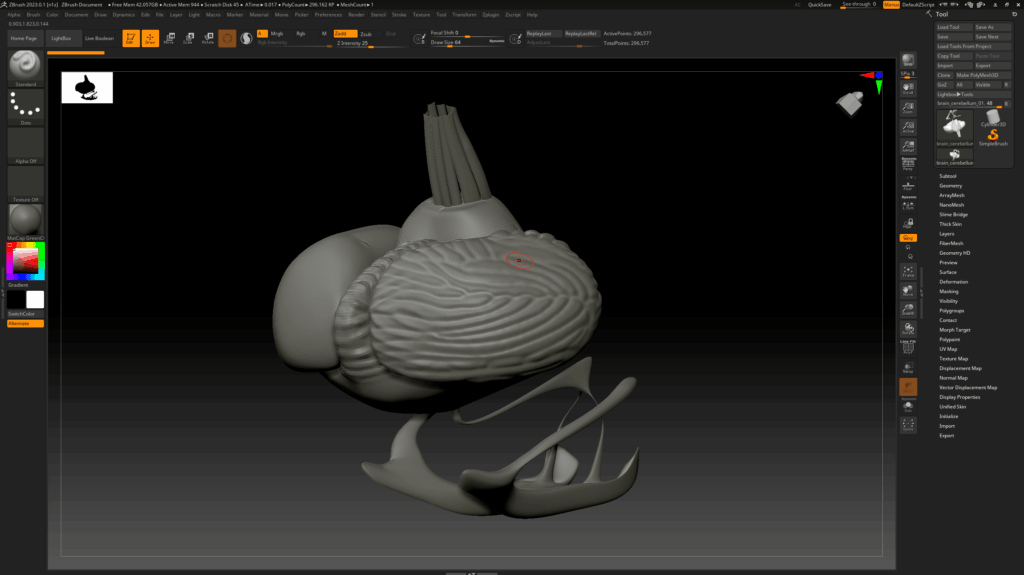
Step 2 — Sculpting (ZBrush) The model was brought into ZBrush to sculpt surface details and make the brain more visually appealing — adding the organic complexity that makes it feel alive.
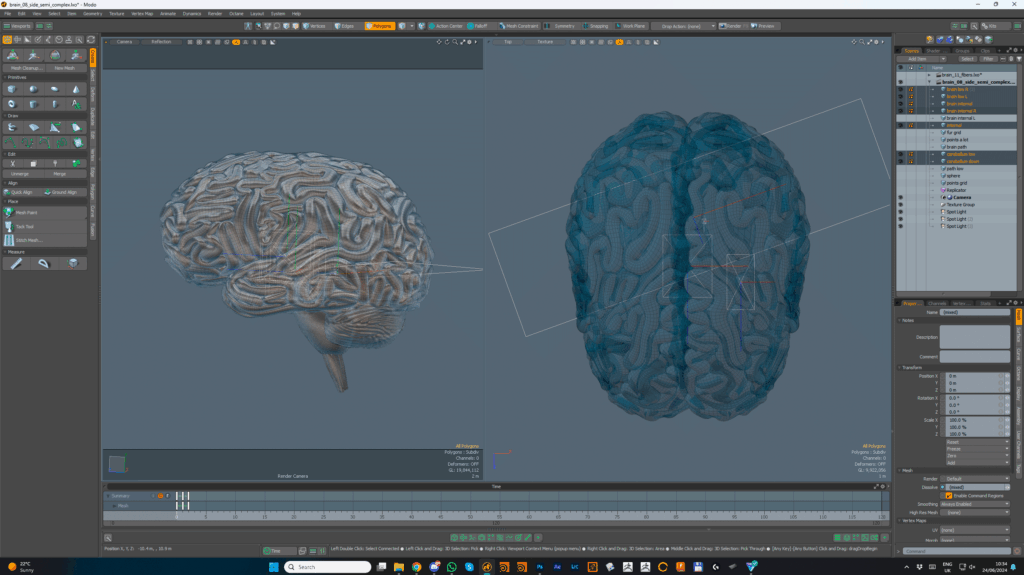
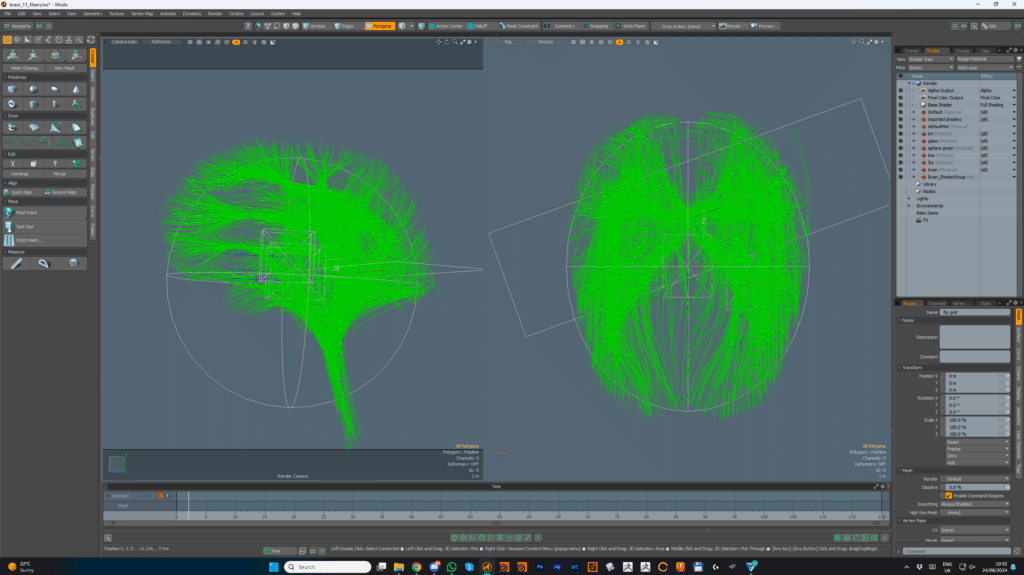
Step 3 — Assembly & neural fibers (Modo) Back in Modo, all parts were assembled and checked together. Millions of neuron connections were then simulated using Modo’s hair/spline system — more artistic interpretation than strict anatomical accuracy, but visually conveying exactly what the CLARITY method reveals: the brain’s hidden wiring.
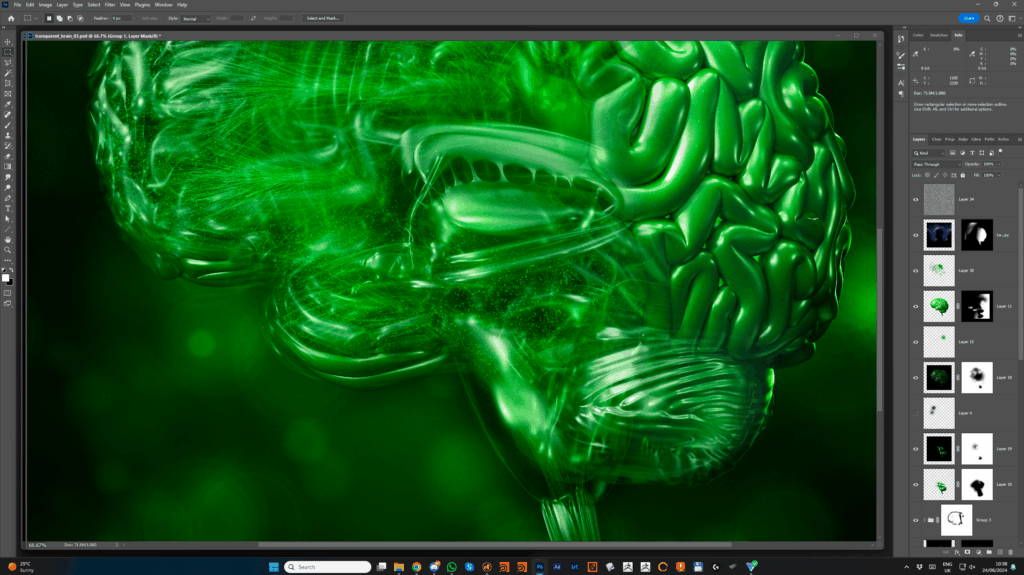
Step 4 — Compositing (Photoshop) All render passes were assembled using masks to control the transparency gradient — solid cortex on one side, dissolving into glowing neural chaos on the other.
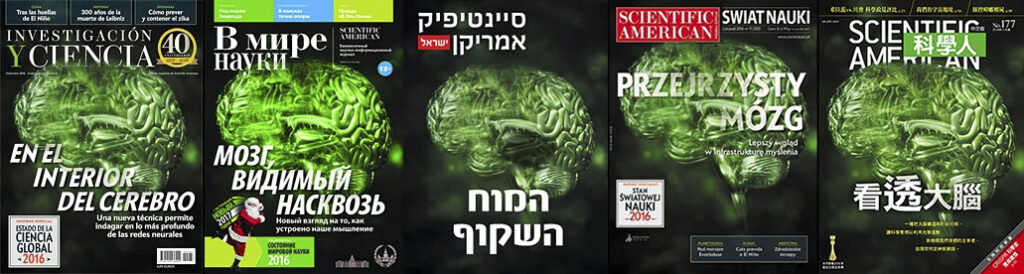
The illustration was published across multiple international editions of Scientific American — including the Spanish (Investigación y Ciencia), Russian (В мире науки), Hebrew, Polish (Świat Nauki), Chinese, and English editions, among others.
The result ended up on the cover of Scientific American worldwide.
Tools: Modo · ZBrush · Photoshop
Art Director : Michael Mrak
Client : Scientific American
Agent : Richard Solomon Artists Representative